Team Stories
HIA Team Stories: Michael & his dad Terry

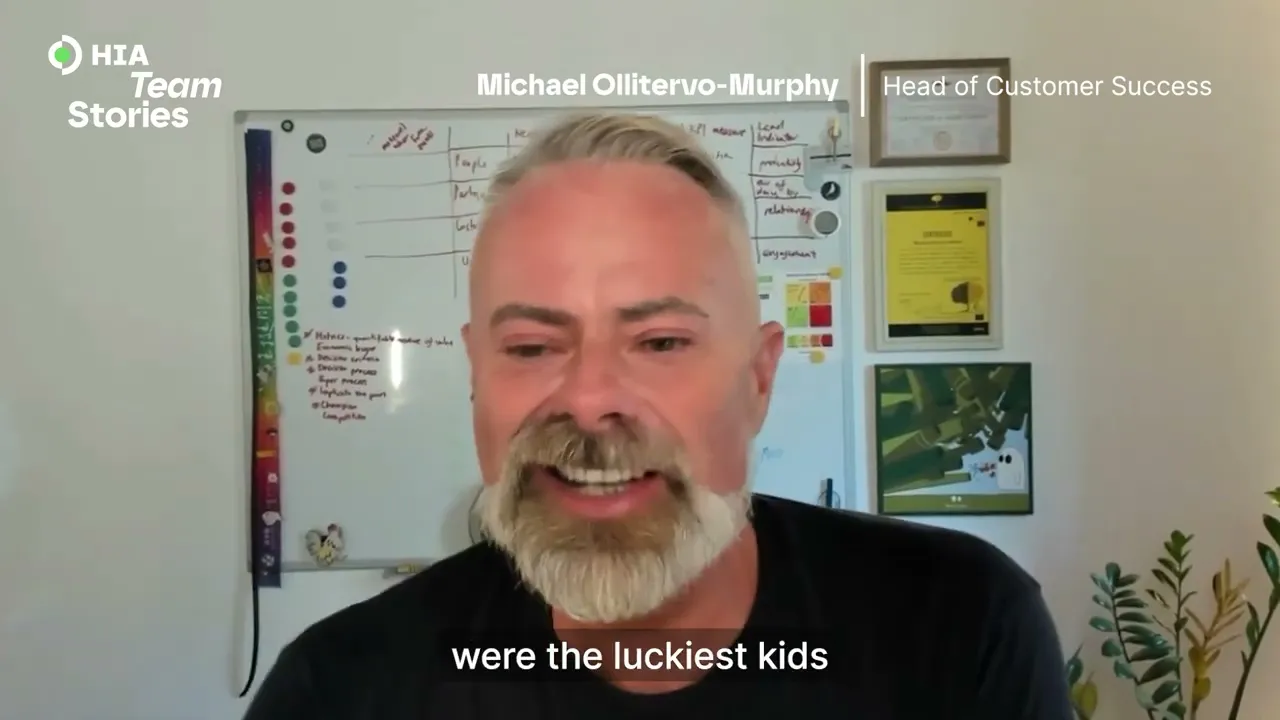
Michael Ollitervo Murphy leads Customer Support at HIA. Before this, he spent years watching his father Terry go from the most confident, outgoing man he knew to someone who no longer trusted his own body. This is his story, in his own words.
Who Was my Dad
My dad, Terry, was a role model for a lot of people in my hometown, not just our family. He taught at the same school for 42 years, three generations of kids came through his classroom, and he helped them become confident, get jobs, have their own kids. Outside of school he was an accomplished chess player, a really good oil painter, he loved cricket, and he taught geology, so as kids we'd go to the beach and he'd show us all the different rocks. He was outgoing. Strong. The kind of person people leaned on.
The Difficulty of Decline
Watching that change was the hard part. I was living in different countries at the time, so I'd see him in gaps, and each time I went back I noticed a little more of a difference. Then he had a major stroke, and after that he became a shell of who he used to be. He lost the confidence to go out and see his friends. He was nervous about falling because his mobility wasn't what it was. He'd sometimes forget to take the medication that kept him well.
And that's where it got hard for me and my brother and sister, because so much of our time with him became about that—have you been to the doctor, what were the blood test results, did you take your pills. We spent so much of his final years nagging instead of just being with him. He was still my dad, but he wasn't the person I remembered as a kid, and we lost time we didn't get back.
Treasured Memories
There's one memory I always come back to, though. When we were kids we lived close to a beach, and on summer evenings my mum would pack a picnic and we'd all go down for dinner on the sand. Before we headed home, dad would say, "let's go look for money in the sand"—and we'd find coins as we walked, and thought we'd discovered treasure. It wasn't until he told us, more than 30 years later, that he'd been walking ahead of us the whole time, throwing coins over his shoulder so we'd have something to spend at the sweet shop. That was dad. Sweet, and quietly generous, and he never once told us.
If I could have one more evening with him, I wouldn't spend it checking on how he was doing. I'd want to tell him about the things I've done since, the things I'm proud of, how much I appreciated what he gave me and to the tens of thousands of kids he taught over 42 years. Just good time, not nagging time.
Finding Independence with HIA
That's the part of me that recognized HIA immediately. I know exactly what it's like to worry—has dad taken his medication, did he have a fall, did that doctor's appointment actually happen and he just didn't call to tell me. Something like HIA could have given me and my sister and brother real confidence that things were okay, or told us the moment something wasn't. And it could have given dad confidence too—to go for a walk, to meet his friends, knowing that if something happened, help would know. I think that would have kept him being who he always was for longer, instead of withdrawing out of fear of falling.
It wouldn't have stopped his decline. Nothing could have. But it would have given us better, more honest time while he was still well enough to have it—more of him being himself, and less of us managing him.
I think a lot about how hard it is for a parent to go from being the one who raised you to being the one who needs you. Dad's generation didn't really talk about health, didn't make a fuss, just got on with it—and there's something in that, but it also meant it took him a long time to accept that it was okay to ask for a bit of help. I don't think he ever stopped feeling like it should have been the other way around.
Preserving Dignity
That's what I want this work to protect: dignity. Caring for a parent, and watching them need you in ways they never expected to, is painful for everyone involved. But with the right support and the right information, I think we can help people hold onto their independence longer, and help families spend less time worrying and more time just enjoying each other. Keeping the good memories at the front, not the nagging. That's something I really want to be part of.
Michael Ollitervo Murphy leads Customer Support at HIA. Before this, he spent years watching his father Terry go from the most confident, outgoing man he knew to someone who no longer trusted his own body. This is his story, in his own words.
Who Was my Dad
My dad, Terry, was a role model for a lot of people in my hometown, not just our family. He taught at the same school for 42 years, three generations of kids came through his classroom, and he helped them become confident, get jobs, have their own kids. Outside of school he was an accomplished chess player, a really good oil painter, he loved cricket, and he taught geology, so as kids we'd go to the beach and he'd show us all the different rocks. He was outgoing. Strong. The kind of person people leaned on.
The Difficulty of Decline
Watching that change was the hard part. I was living in different countries at the time, so I'd see him in gaps, and each time I went back I noticed a little more of a difference. Then he had a major stroke, and after that he became a shell of who he used to be. He lost the confidence to go out and see his friends. He was nervous about falling because his mobility wasn't what it was. He'd sometimes forget to take the medication that kept him well.
And that's where it got hard for me and my brother and sister, because so much of our time with him became about that—have you been to the doctor, what were the blood test results, did you take your pills. We spent so much of his final years nagging instead of just being with him. He was still my dad, but he wasn't the person I remembered as a kid, and we lost time we didn't get back.
Treasured Memories
There's one memory I always come back to, though. When we were kids we lived close to a beach, and on summer evenings my mum would pack a picnic and we'd all go down for dinner on the sand. Before we headed home, dad would say, "let's go look for money in the sand"—and we'd find coins as we walked, and thought we'd discovered treasure. It wasn't until he told us, more than 30 years later, that he'd been walking ahead of us the whole time, throwing coins over his shoulder so we'd have something to spend at the sweet shop. That was dad. Sweet, and quietly generous, and he never once told us.
If I could have one more evening with him, I wouldn't spend it checking on how he was doing. I'd want to tell him about the things I've done since, the things I'm proud of, how much I appreciated what he gave me and to the tens of thousands of kids he taught over 42 years. Just good time, not nagging time.
Finding Independence with HIA
That's the part of me that recognized HIA immediately. I know exactly what it's like to worry—has dad taken his medication, did he have a fall, did that doctor's appointment actually happen and he just didn't call to tell me. Something like HIA could have given me and my sister and brother real confidence that things were okay, or told us the moment something wasn't. And it could have given dad confidence too—to go for a walk, to meet his friends, knowing that if something happened, help would know. I think that would have kept him being who he always was for longer, instead of withdrawing out of fear of falling.
It wouldn't have stopped his decline. Nothing could have. But it would have given us better, more honest time while he was still well enough to have it—more of him being himself, and less of us managing him.
I think a lot about how hard it is for a parent to go from being the one who raised you to being the one who needs you. Dad's generation didn't really talk about health, didn't make a fuss, just got on with it—and there's something in that, but it also meant it took him a long time to accept that it was okay to ask for a bit of help. I don't think he ever stopped feeling like it should have been the other way around.
Preserving Dignity
That's what I want this work to protect: dignity. Caring for a parent, and watching them need you in ways they never expected to, is painful for everyone involved. But with the right support and the right information, I think we can help people hold onto their independence longer, and help families spend less time worrying and more time just enjoying each other. Keeping the good memories at the front, not the nagging. That's something I really want to be part of.
Copyright © 2026
Health Impact Alliance LLC
Copyright © 2026
Health Impact Alliance LLC
Copyright © 2026
Health Impact Alliance LLC
Explore
U.S. Office
8 The Green, Suite B, Dover, DE, 19901, USA
London Office
London Office
167-169 Great Portland Street 5th Floor London, W1W 5PF, UK
167-169 Great Portland Street 5th Floor London, W1W 5PF, UK
Hong Kong Office
Unit 2406B, 24/F, Low Block, Grand Millennium Plaza, 181 Queen's Road Central, Sheung Wan, Hong Kong
香港上環皇后大道中181號新紀元廣場低座24樓2406B室
Stockholm Office
Brännkyrkagatan 76, 118 23 Stockholm Sweden
Shenzhen Office
Room 3407, Building 1, Fangda City, Taoyuan Subdistrict, Nanshan District, Shenzhen City, Guangdong Province, P.R. China
深圳市南山区桃源街道方大城T1栋3407室